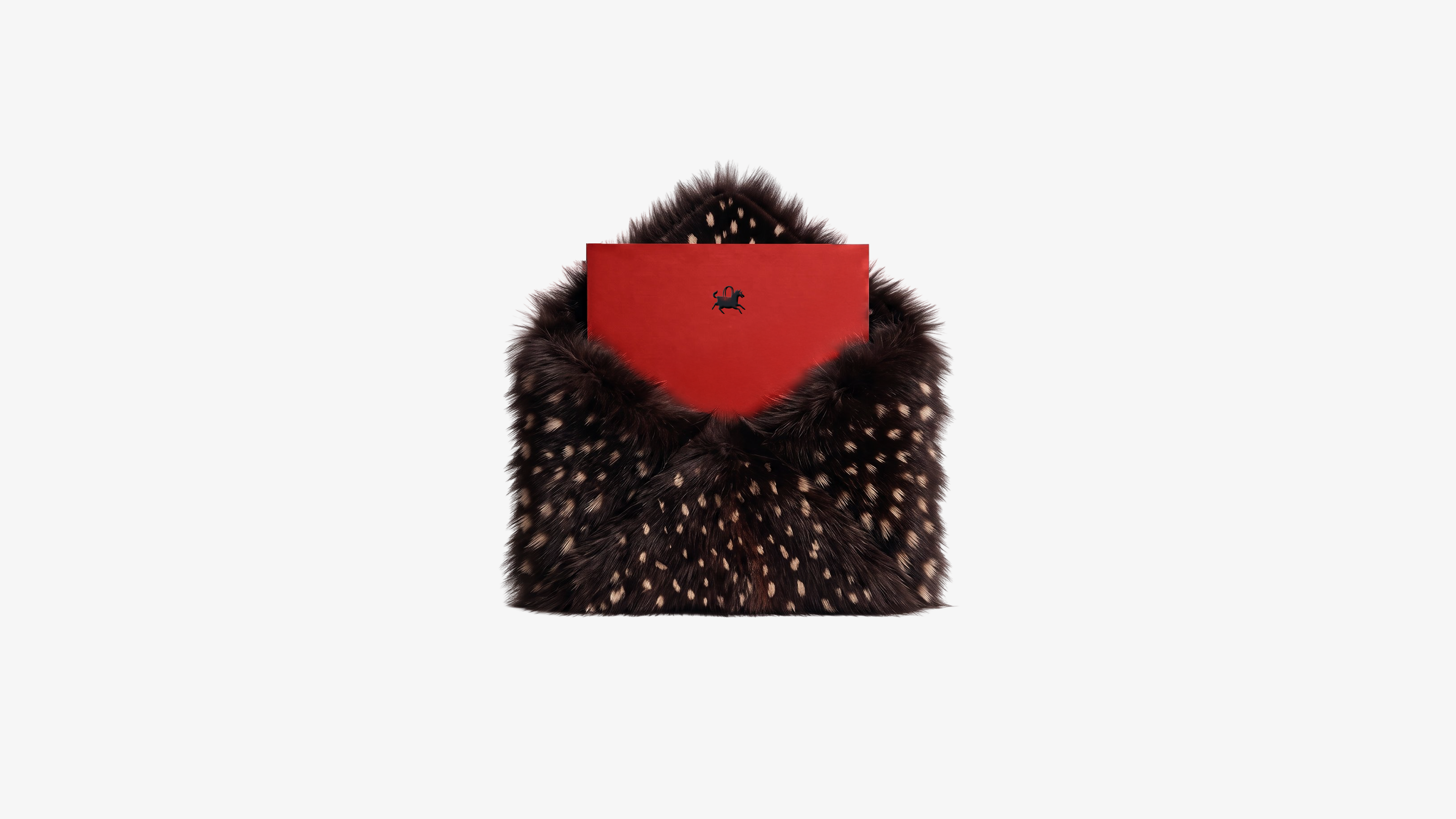
Snow Queen. In a new way
Snow Queen is a Russian fashion brand with a long history and deep expertise in its category, offering clothing, footwear, and accessories. Over the years, the brand’s assortment has expanded significantly: alongside fur and outerwear made from natural materials, it now includes knitwear, suits, shoes, accessories, and limited collections. Our task was to create a contemporary Snow Queen while preserving what the brand has always been valued for: expressiveness, a sense of luxury, and a special attitude toward clothing — and to find a new continuation for this story.
We began with market analysis, audience research, and a study of the semiotics of femininity in Russian culture. By 2025, the market had passed through a phase of rapid growth and entered a stage of consolidation: the product offering had become extensive but homogeneous, with a noticeable skew toward youth trends and prices that were rising faster than quality. A demand for mature fashion had emerged but remained almost unnoticed: there were virtually no offerings that met the needs of an adult, self-sufficient person seeking to develop their own style while remaining true to themselves. This is how the “In a new way” platform came to be—celebrating a maturity that does not preclude freedom, sensuality, and an interest in fashion. One of the themes identified during the research was “Like a fairy tale”—a modern interpretation of a familiar story told in a new way: without directly quoting folklore, but with dignity and a touch of mystery. The works of Ivan Bilibin, which blend the real world with fantasy, served as a guiding inspiration.
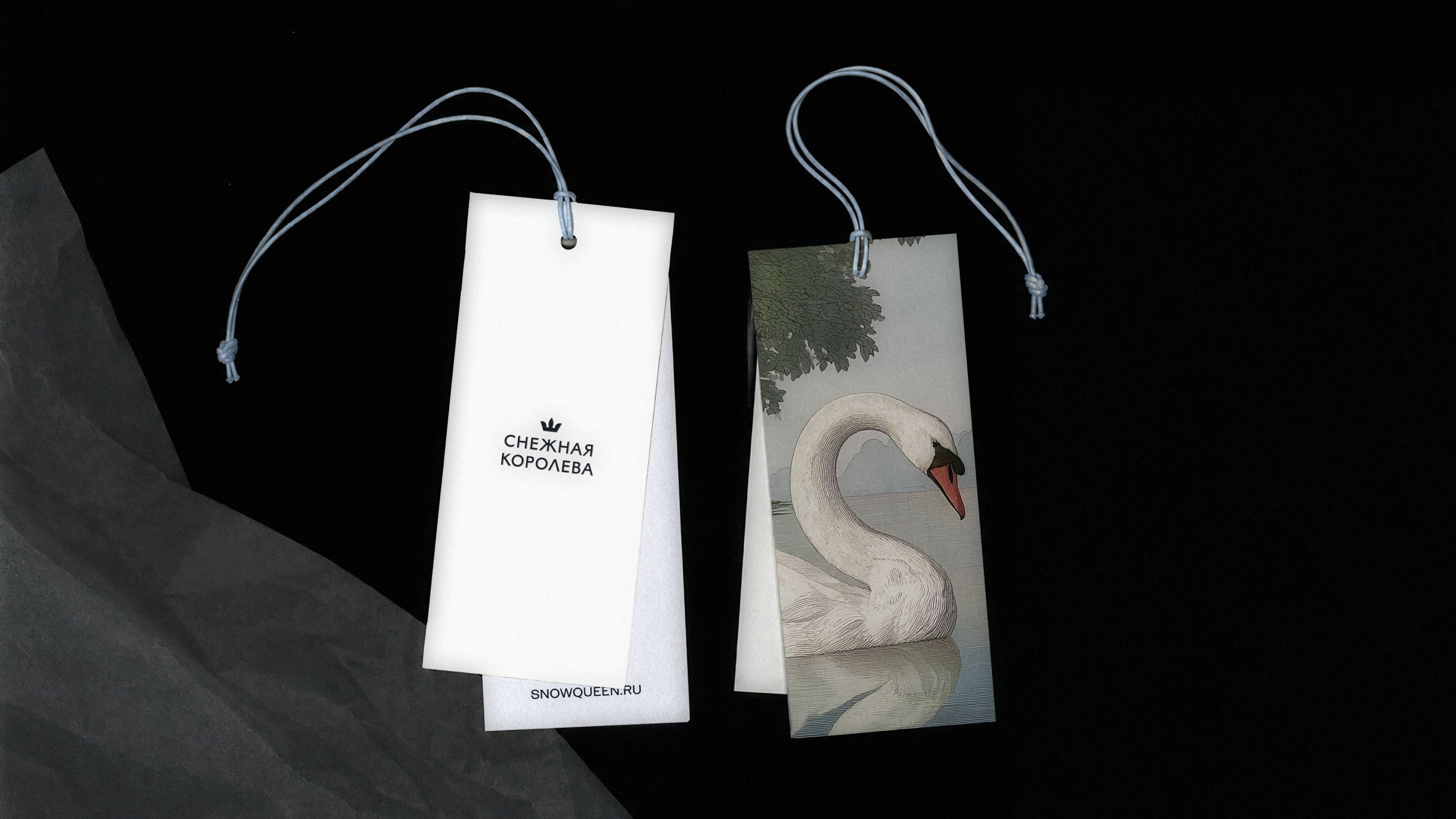
The logo has evolved through subtle nuances: we preserved the familiar structure but made the glyphs more fluid and expressive, adjusting the proportions and specific details. The logo has become more cohesive and distinct—without giving the impression of a radical rebranding. The crown became an independent element of the system, linking the visual language with the "In a New Way" platform across branding, physical assets, and communications. On the men's line products, it completely replaced the brand name on the tag.
At the core of the identity is a multi-layered system of illustrations that evolves from simple to complex. At the first level, there are small imagery elements tied to seasons, collections, and specific categories. Next, more distinctive objects and characters emerge, each with their own roles and stories, ready to live within the brand's communications.
At the most complex level, the illustrations transform into full-scale artistic scenes that interact with photography, creating the feeling of a cohesive, fairytale world.
In the interfaces, we continued to employ book layout techniques: large margins, ample whitespace, a centered composition, and signature illustrations subtly support the identity while keeping the product in the spotlight. Thanks to this approach, a sense of mystery is preserved, while user scenarios remain clear and functional.
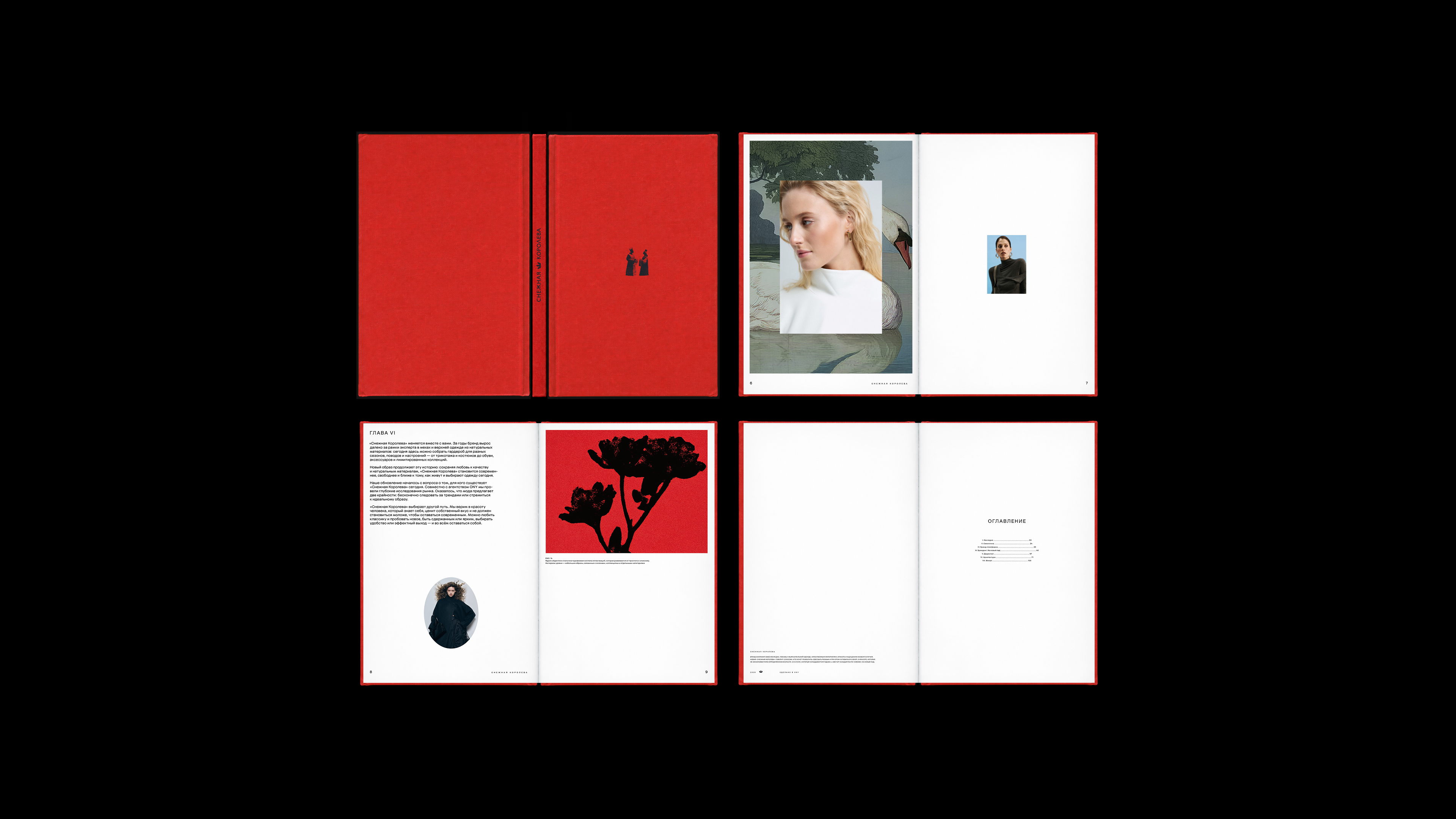
We rebuilt the e-commerce store's core user journeys: the catalog, search, filters, product detail pages, cart, checkout, delivery, and payment. We simplified the structure of individual pages, making the interaction calmer and more intuitive.
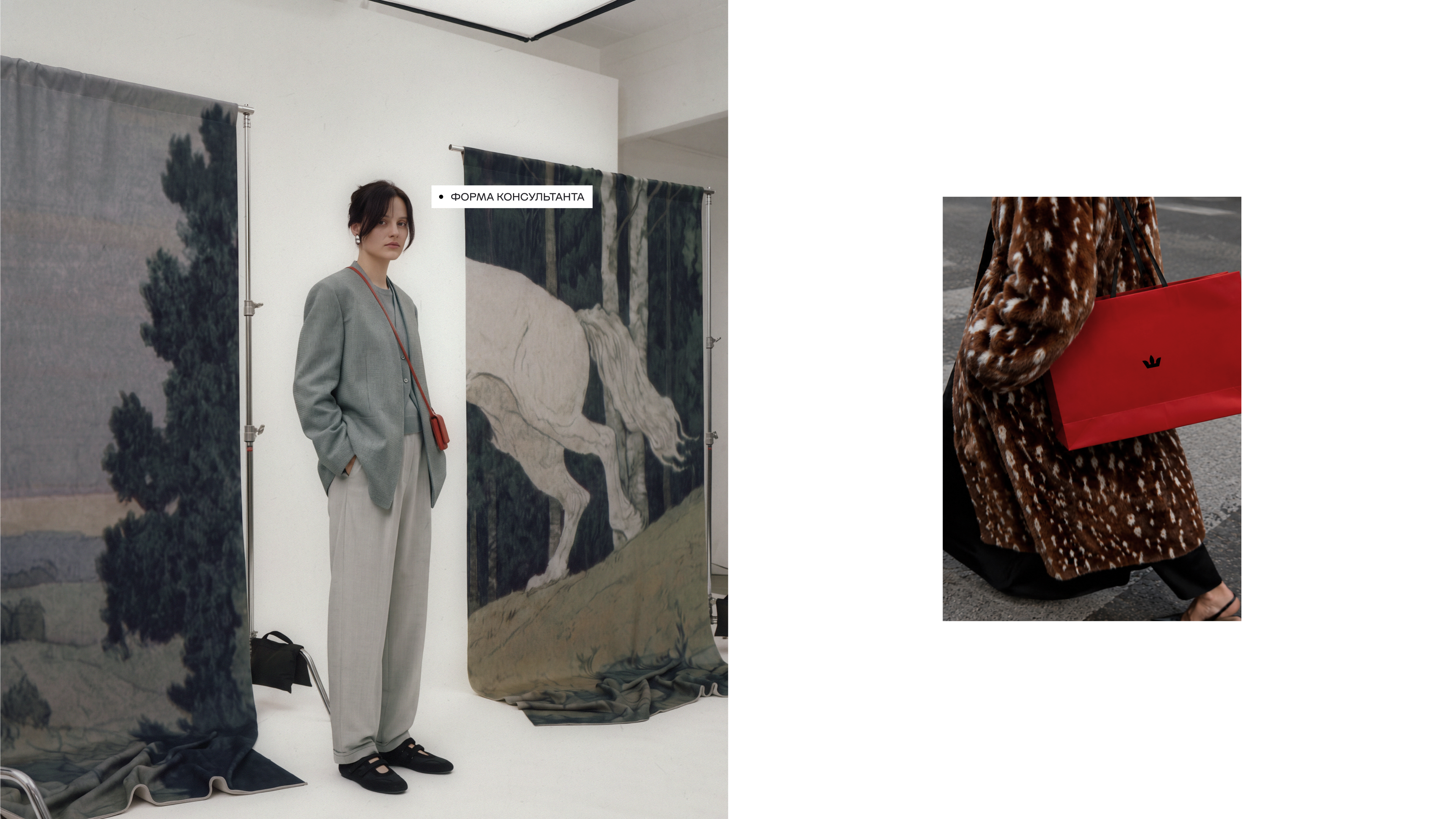
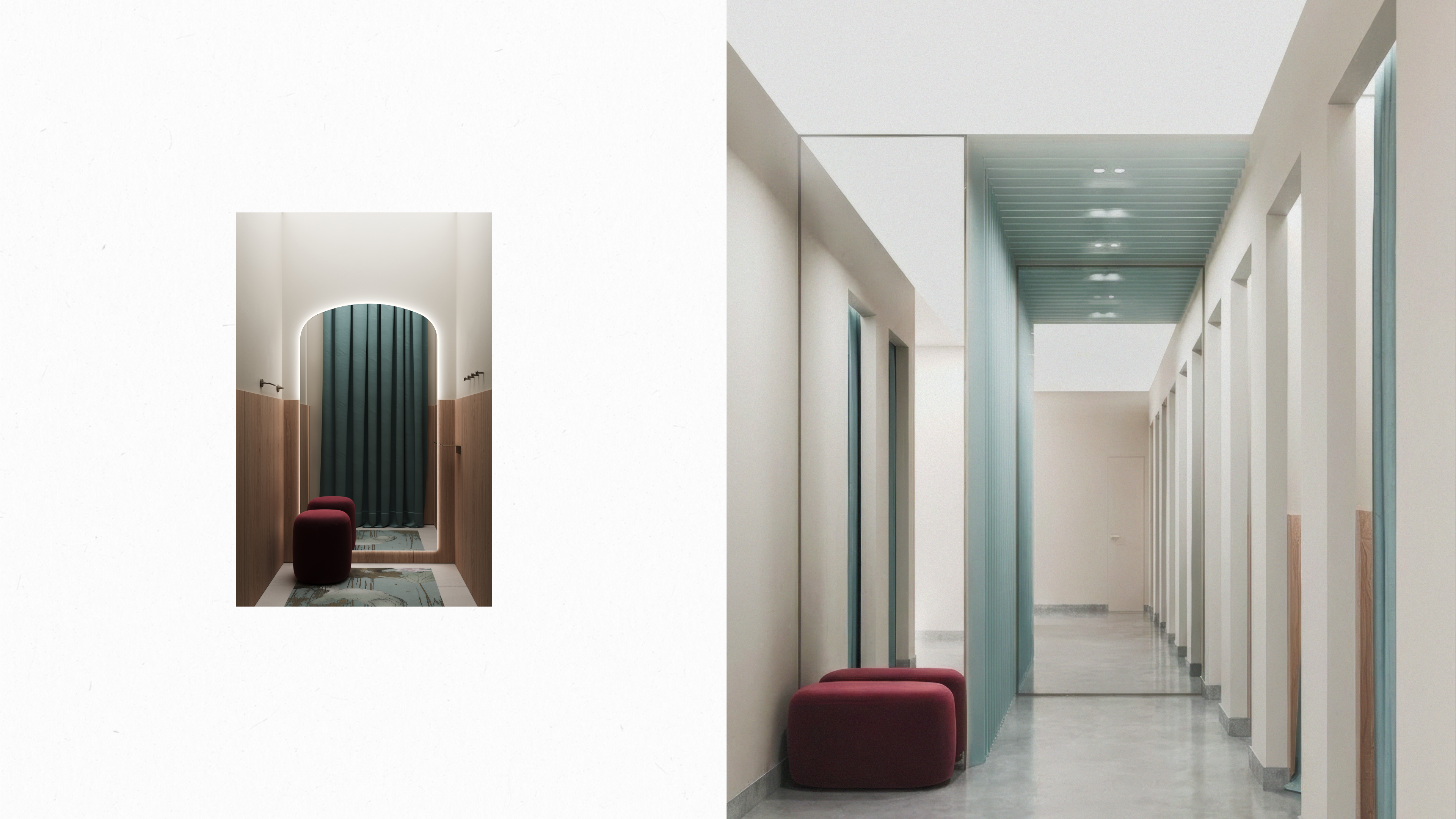
A standalone extension of the identity is a system of new decor and finish elements—a toolkit of design techniques that can be scaled and adapted to various retail spaces. The materials, textures, prints, and decor details refer back to the brand’s fairytale world. Chandeliers resembling ice droplets, red accents in furniture, and textile screens create the feel of an intimate, cozy space. Men's zones are distinguished by their unique textures and lighting, making them recognizable in the store layout without the need for signage. Through this approach, spatial design seamlessly translates the artistry and magical atmosphere into the physical environment.
The Snow Queen has preserved its heritage while gaining a new positioning and a cohesive system of imagery that matches the brand’s scale and product evolution. Strategy, identity, interior design, and the digital environment have converged into a unified experience for a customer whose style is not confined to age, trends, or social roles.